
No Surgery.
No Hospital Stay.
30 Minutes Procedure Only.
Same day discharged,
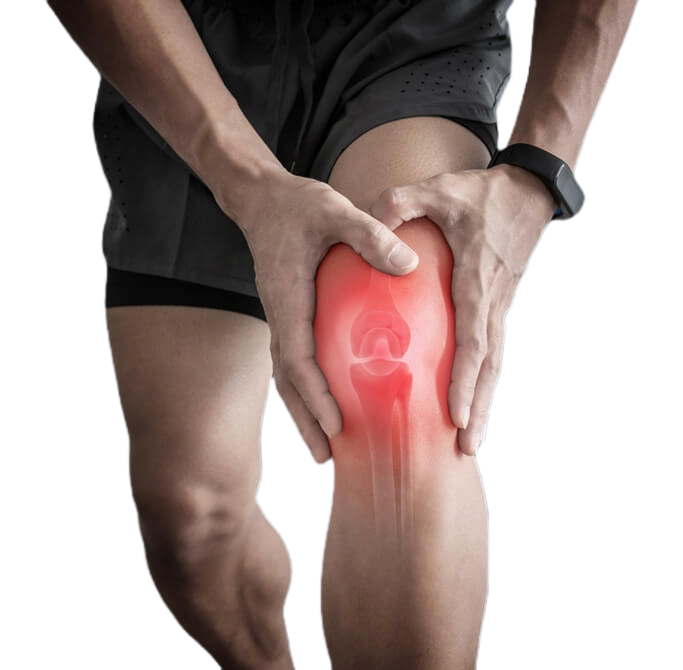
Knee pain is a common complaint affecting people of all ages. This may be a result of an injury or due to medical conditions such as arthritis, gout, etc, and even infection. The knee joint is made up of bones, ligaments, tendons, cartilage, and bursae. Injury or inflammation of one of these structures can lead to bone and joint issues in the knee. Knee pain can lead to joint damage and lead to low or no mobility if left untreated.
Explore effective, non-surgical relief at Stork Pain Clinic. Discover why we’re the Best Knee Pain Clinic in Hyderabad.

Knee pain can result from various causes, and it’s essential to identify the specific reason for accurate diagnosis and appropriate treatment. Conditions commonly linked to knee pain include:
Osteoarthritis (OA): Osteoarthritis is a degenerative joint disease that occurs when the protective cartilage that cushions the ends of bones wears down over time. Causes: Aging, joint injury, obesity, and heredity.
Ligament Injuries: Ligaments are tough bands of tissue that connect bone to bone. Injuries can involve sprains or tears to these ligaments. Common Ligament Injuries are Anterior Cruciate Ligament (ACL) injury, Posterior cruciate ligament (PCL) often occurring during sports or traumatic incidents and Medial Collateral Ligament (MCL) injury.
Pes Anserine Bursitis: Inflammation of the bursa (fluid-filled sac) located on the inner side of the knee, below the joint.
Baker’s Cyst: A Baker’s cyst is a fluid-filled swelling that forms behind the knee.
Rheumatoid Arthritis: An autoimmune disorder causing inflammation of the joints, including the knee.
STEROID INJECTIONS : steroid injections will give instantaneous pain relief , but temporarily. But repeated injection can weaken the ligaments and tendons & can be detrimental to the healthy cartilage. Other hazards of using steroid injections are elevated sugars in diabetics or increased blood pressure in patients with hypertension.
VISCOSUPPLEMENTATION:. Hyaluronic acid, a sticky and slippery drug, is injected into the knee to cushion the joint and relieve discomfort.. This hyaluronic acid acts as a gel between the bones, forming a protective barrier that allows the joint to slide rather than grind.
PLASMA injection or PLATELET RICH PLASMA : It is prepared from autologous blood by centrifugation to obtain plasma that is highly concentrated with platelets. These platelets are rich in growth factors; these growth factors produces inflammation at the injection site and repairs and regenerate the damaged cartilage. This provides good & long lasting pain relief.
RADIOFREQUENCY ABLATION of genicular nerve: here radiofrequency waves are delivered to the target genicular nerves, with the goal to interrupt the communication of pain to the brain.. It’s a low-cost, minimally intrusive way to relieve pain, restore function, and even avoid knee surgery entirely.
At Stork Pain Clinic, Hyderabad, our experts are specialized in providing extensive knee pain therapies and effective interventions to help patients efficiently manage pain.
These therapies include:
Exercise and physical therapy: Some knee pain exercises help strengthen muscles and ease pain. But you need to know which exercises should be strictly avoided because they could cause further damage to your knee.
Medication: Pain medication for knee pain includes over-the-counter nonsteroidal anti-inflammatory drugs and steroids.
Genicular nerve blocks: This treatment blocks pain signals that the genicular nerves transmit between the knee joint and the brain. This is first done with an anesthetic injection for short-term relief. If it is effective, the patient can get longer-term relief with a nonsurgical procedure called radiofrequency ablation (RFA).
Regenerative therapies: The knee is a very vital weight-bearing joint which can easily get injured due to falls, sports activities and trauma. Pain caused due to such injuries responds very well to the supportive injections of stem cells/platelet-rich plasma (PRP) therapy. During the therapy, the platelet-rich plasma is taken from the patient’s own blood and injected into the damaged ligament cartilage or tendon.
Joint Injections: In the case of osteoarthritis patients, a number of injectables, including corticosteroids and hyaluronic acid proves to be very effective in treating painful knee.
Radiofrequency Ablation (RFA): This is a minimally invasive outpatient surgery and is typically used to treat pain from osteoarthritis or a previous injury. During the procedure, the physician uses x-ray-guided needles that have a gentle electric current to ablate or burn off the nerves causing the pain.
Intra-articular corticosteroid injection: This pain management therapy has been successfully used to treat patients with knee osteoarthritis. This is ideal for individuals who cannot tolerate the side effects of long-term pharmaceutical therapy.
Trigger point injections: This is yet another effective way to reduce arthritis pain in the knee by introducing corticosteroids or anesthetic substances that gradually cause your muscles to relax, relieving discomfort.
WhatsApp us