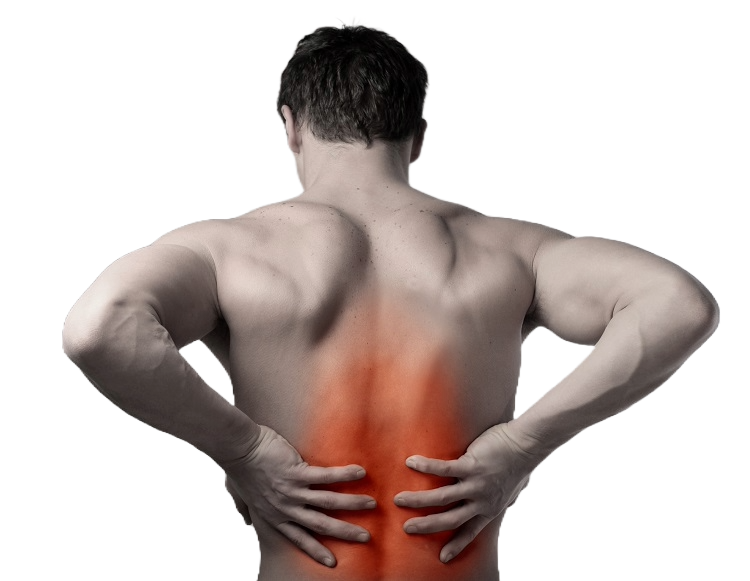
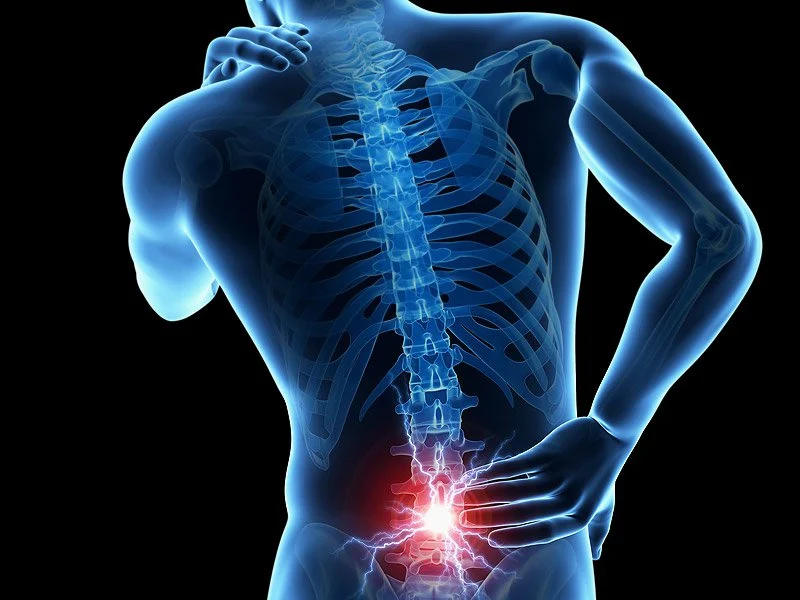
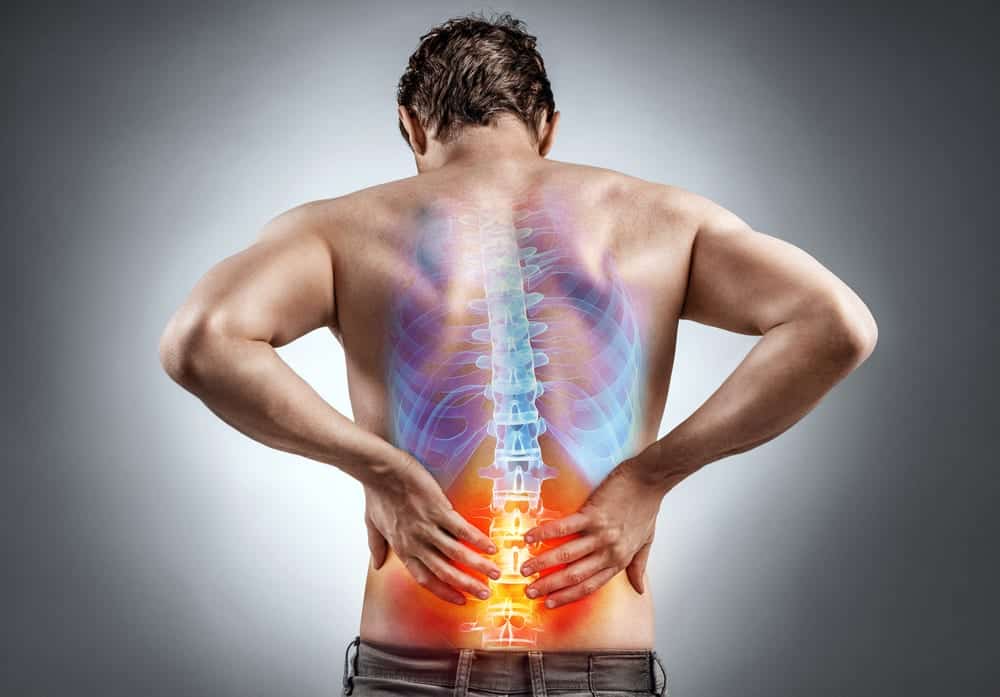
Back pain is a significant clinical and socioeconomic challenge, standing as the primary cause of years lived with disability globally. Axial pain refers to discomfort in the back from the neck downwards, termed lumbago when located in the low back. Additionally, pain radiating from the buttocks to the ankle and foot is known as radicular pain or sciatica. This pain can manifest suddenly, triggered by unfamiliar activities or heavy lifting, or it may be chronic, arising after prolonged standing or extended periods of sitting.
TYPES OF BACK PAIN
Low back pain can be categorized based on its duration, with acute pain lasting less than 6 weeks, sub-chronic lasting from 6 to 12 weeks, and chronic persisting for more than 12 weeks. In approximately less than 20% of cases, the specific cause of back pain, such as infection or disc prolapse, can be identified. However, for the majority of patients, exceeding 80%, the origin of pain remains unclear, leading to the classification of ‘non-specific LBP’ or ‘mechanical LBP.’ Despite the absence of detectable abnormalities on X-ray, CT scan, or MRI, these patients experience undeniable back pain.
Low Back Pain
Low back pain may be classified by duration as acute (pain lasting less than 6 weeks), sub-chronic (6 to 12 weeks), or chronic (more than 12 weeks).
Mechanical Back pain
Low back pain may be classified by duration as acute (pain lasting less than 6 weeks), sub-chronic (6 to 12 weeks), or chronic (more than 12 weeks).
Facetogenic back pain
Low back pain may be classified by duration as acute (pain lasting less than 6 weeks), sub-chronic (6 to 12 weeks), or chronic (more than 12 weeks).
Sign and Symptoms of Back Pain
Back pain is a prevalent symptom, characterized by sensations of aching, squeezing, burning, or shock-like discomfort. The pain may be confined to the lumbar or lumbosacral area.
It may extend to the lower limbs, a condition known as sciatica. Back pain can intensify with specific activities, such as standing, sitting, or walking, depending on the source of the pain.
It may be linked to sensations of tingling, numbness, weakness, or a reduction in reflexes in the legs. In instances of significant narrowing of the spinal space, there is a potential for loss of control over bladder and bowel functions.
Precaution
Regular exercise is very important for back health.
Intervertebral disc has no blood supply of its own.
Its nourishment is derived from the surrounding tissue fluid, entering it through exercises involving forward and backward bending of the back.
Walking serves as a beneficial exercise as it engages the left and right sides alternately with each step. On the other hand, running, being a high-impact exercise, has the potential to induce gradual degenerative changes.
It is important to know what exercise is beneficial to maintaining back health.
Causes Of Back Pain
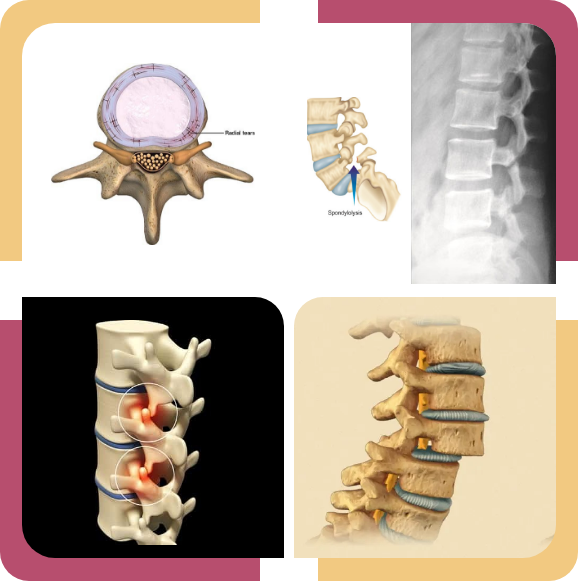
Slippage of one vertebra over another (spondylolisthesis) causes narrowing of the space between the two vertebrae and lead to pain.
Lumbar canal stenosis is a common cause of back pain radiating to the legs in old age.
Degenerative disc disease is a common cause of back pain in the young. Mental stress can cause back muscle spasm because the mind and muscle are intimately connected.
The deficiency of vitamin D and Vitamin B12 are associated with chronic pains. Vitamin B12 is responsible for forming the insulating sheath around nerves called myelin (rather similar to the insulating plastic sheath on a copper wire.
Its deficiency will increase the nerve irritability due to lack of proper insulation. Vitamin D3 act as a natural anti-inflammatory agent. Many patients undergo back surgery to get relief from back pain due to causes like a bulging disc.
After back surgery some patients continue to have pain. Causes of such post back surgery pains could be incomplete correction of cause of pain, recurrence of the problem after surgery, or instability and weakness caused due to the surgical trauma itself.
Treatment for Back Pain
Mechanical Back pain is the commonest cause of back pain. Targeting the muscles is essential in all kinds of back pain. Ultrasound guided dry needling is a unique method to do so. All the muscles of the back and back of legs are targeted using needles of various lengths under the guidance of ultrasound.
Discogenic pain are treated with injection of steroid transforaminally into the epidural space where the nerve comes out of the spine with the help of real time X-ray. This ensures that the steroid goes into the correct spot to reduce the swelling and inflammation around the nerve so that the pain, shocks, tingling and numbness are all reduced. Use of X-ray and dye increase the accuracy and hence the results are good.
Ozone Discectomy (Ozonucleolysis) is another option for treating recalcitrant discogenic pains is injection of Ozone-Oxygen mixture into the disc. This treatment can avoid disc surgery in selected cases.
Pulsed radiofrequency of the dorsal root ganglion is employed for patients experiencing sciatica (radicular pains) through the use of a radiofrequency generator. This procedure reduces pain-carrying signals from the compromised nerve root caused by a disc bulge, without affecting its functionality.
The spine’s vertebrae have paired facet joints on either side, which may become arthritic, leading to muscle spasm pain. This condition can be temporarily relieved with an injection into the facet joint. However, a more effective and longer-lasting treatment involves radiofrequency ablation of the nerves carrying pain sensations. A specialized needle with an open tip, conveying an electrical current from a radiofrequency (RF) generator, heats a small area of the nerve, rendering it incapable of transmitting pain signals from the facet joint. RF is a safe and highly effective method that helps patients with chronic low-back pain not only achieve freedom from pain but also return to an active lifestyle, especially when complemented by ultrasound-guided diagnostic nerve blocks (USGDN).
Platelet-rich plasma (PRP) is derived from the patient’s own blood taken in the same session. After processing, the PRP is injected into arthritic facet joints. Rich in growth factors, PRP halts degeneration of the facet joints.
Back pain stemming from spondylolysis responds well to steroid injections into the fractured segment for healing, coupled with ultrasound-guided diagnostic nerve blocks (USGDN) to address muscle spasms. If left untreated, spondylolysis can progress to spondylolisthesis, involving the sliding of one vertebra over another.